

What connects football, maths and ABBA? It sounds like the setup to a pub quiz, but stick with us – because it turns out they all play a part in a question thats been asked for years: how can we make penalties fairer in football?
We’re not talking about Zlatan humming Dancing Queen at training (though we wouldn’t rule it out). This connection runs deeper – into how games are decided, teams are picked, and pressure is handled when the stakes are high.
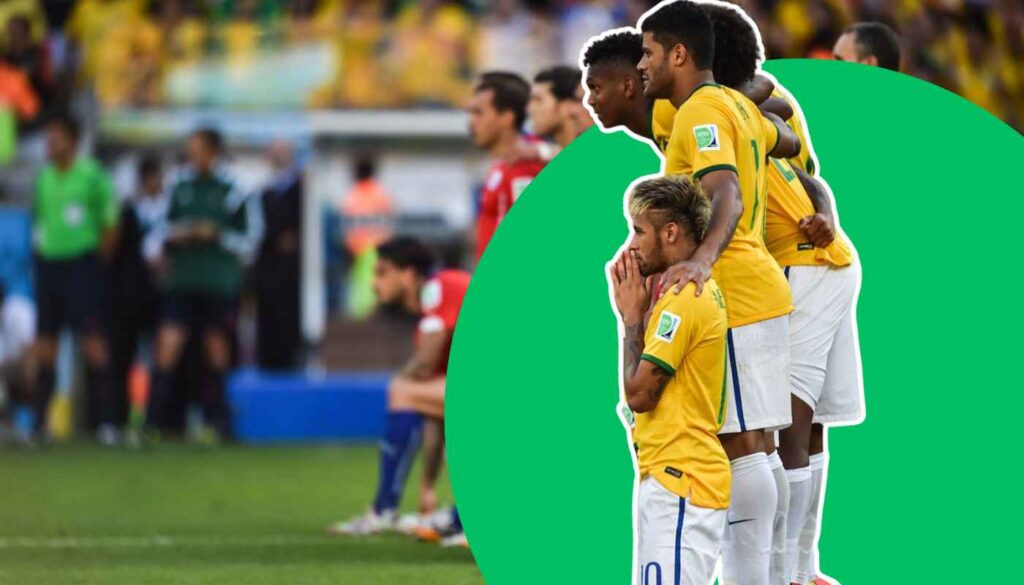
Penalty shootouts are brutal. Fans hate them, players dread them, and statistically, the team that goes first usually has the edge. In a sport obsessed with fine margins, even a slight imbalance can feel like a stitch-up. So it’s no surprise that FIFA and UEFA have dipped their toes into testing an alternative – one they believe could level the playing field. It’s called the ABBA system, and believe it or not, it’s rooted in 19th-century maths.
What Do Football, Maths and ABBA Have in Common?
No, it’s not the setup to a dodgy pub quiz – though we’d definitely play that round. The answer is fairness, or more specifically, how to fairly take turns when something important’s on the line.
The idea was recently revisited in a New Scientist article by Katie Steckles, which uses a weirdly perfect metaphor: a pot of badly brewed coffee. Pour it into two cups, and the first pour is noticeably weaker than the second. Not ideal if you’re trying to share things equally.
Now swap out coffee for penalties or team selections – same issue. If one team always goes first, they often come out with an edge. And in high-pressure moments like a penalty shootout, that slight advantage can make all the difference.
The Real Problem With Taking Turns
The current penalty shootout format most of us are familiar with is ABAB: Team A takes the first pen, then Team B, and so on. But the stats show that Team A wins more often – usually because they have the psychological upper hand of going first.
It’s the same story when picking teams for a kickabout. One captain gets first pick, nabs the best player, then the next best goes to the other team, and so on. It feels fair, but the order can skew the strength of the sides.
The core issue? Taking turns in a simple back-and-forth order doesn’t always balance out over a short sequence. So how do you fix that?
It’s a question that’s popped up in everything from board games to Olympic finals, and while everyone wants fairness, most solutions still favour whoever gets the first go. The challenge isn’t just balancing turns, it’s doing it in a way that feels right, even under pressure.
A Fairer Fix: The ABBA System
This is where 19th-century maths, and a Swedish pop group, step in. It might sound odd, but there’s genuine logic behind it, not just a gimmick. The structure of the sequence has been studied for over a century for its balancing properties.
A mathematician named Eugène Prouhet first came up with what’s now known as the Thue-Morse sequence. It was later refined by Axel Thue and Marston Morse, and it’s basically a clever way to alternate turns without giving either side too much of an advantage.
How does it work in practice? Instead of alternating turns like ABAB, the sequence goes ABBA, then BAAB, then ABBA again – and so on.
That means one team takes the first penalty, then the other takes two, then the first team takes two – and so on. It spreads out the pressure, so one team isn’t always following or always leading.
FIFA and UEFA actually trialled this system in 2017 during youth tournaments (including the UEFA Under-17 Championships) and even tested it in the Community Shield that year between Arsenal and Chelsea. But so far, it hasn’t been rolled out in major competitions. Still, the trials suggest it’s a promising alternative.
More Than Just Penalties
The Thue-Morse / ABBA logic works for all sorts of things.
Even in five-a-side team picking, if you go beyond just A-B-A-B and use a more balanced sequence like ABBA-BAAB, you’ll end up with better-matched sides. Instead of Captain A getting players 1, 3, 5, etc., you mix it up so both captains get a fair spread across the pecking order.
Tennis uses a similar principle. In tiebreaks, players don’t alternate serve every time – they switch after the first point, then take two each. Same goal: reduce advantage, increase fairness. You’ll even see similar thinking in gaming tournaments, chess, and some card games, even online sports betting use similar (with accumulators etc), where turn order can be decisive. Turns out, this simple bit of maths is quietly everywhere, and it works surprisingly well on the pitch too.

Conclusion
There’s something brilliant about using 150-year-old maths to make football feel a bit fairer. And it’s even better when it lets us shout “ABBA!” without needing a karaoke machine.
So next time your team heads to pens, or you’re trying to fairly pick squads down at your local 5-a-side league, maybe ditch the usual back-and-forth and give ABBA a try. A proper system for making things fair.
